From Gaza to medical care, education or protection
Understanding the system
An urgent medical need, a university admission or a potential claim to international protection is not, on its own, enough to enable someone to leave Gaza.
Each pathway depends on a chain of decisions made by different actors: doctors, health authorities, international organisations, receiving States, hospitals or universities, border authorities, diplomatic and consular services.
Understanding this chain helps explain why some cases move forward while others remain blocked — and why coordination between institutions can be as important as the existence of the medical, academic or legal solution itself.
Three distinct pathways
Medical care outside Gaza
A seriously ill or injured patient who needs specialised treatment unavailable in Gaza may be referred for medical evacuation.
Education outside Gaza
A university place or scholarship is essential, but it does not itself create an exit route. Departure, entry permission, funding, travel and reception must still align.
International protection
Asylum and other forms of international protection answer a different question: whether a person who comes within a State's protection system must be protected against return because of persecution or serious harm.
International protection is not, by itself, an evacuation mechanism from Gaza. These pathways can intersect, but they should not be confused.
Medical evacuation: how does the process actually work?
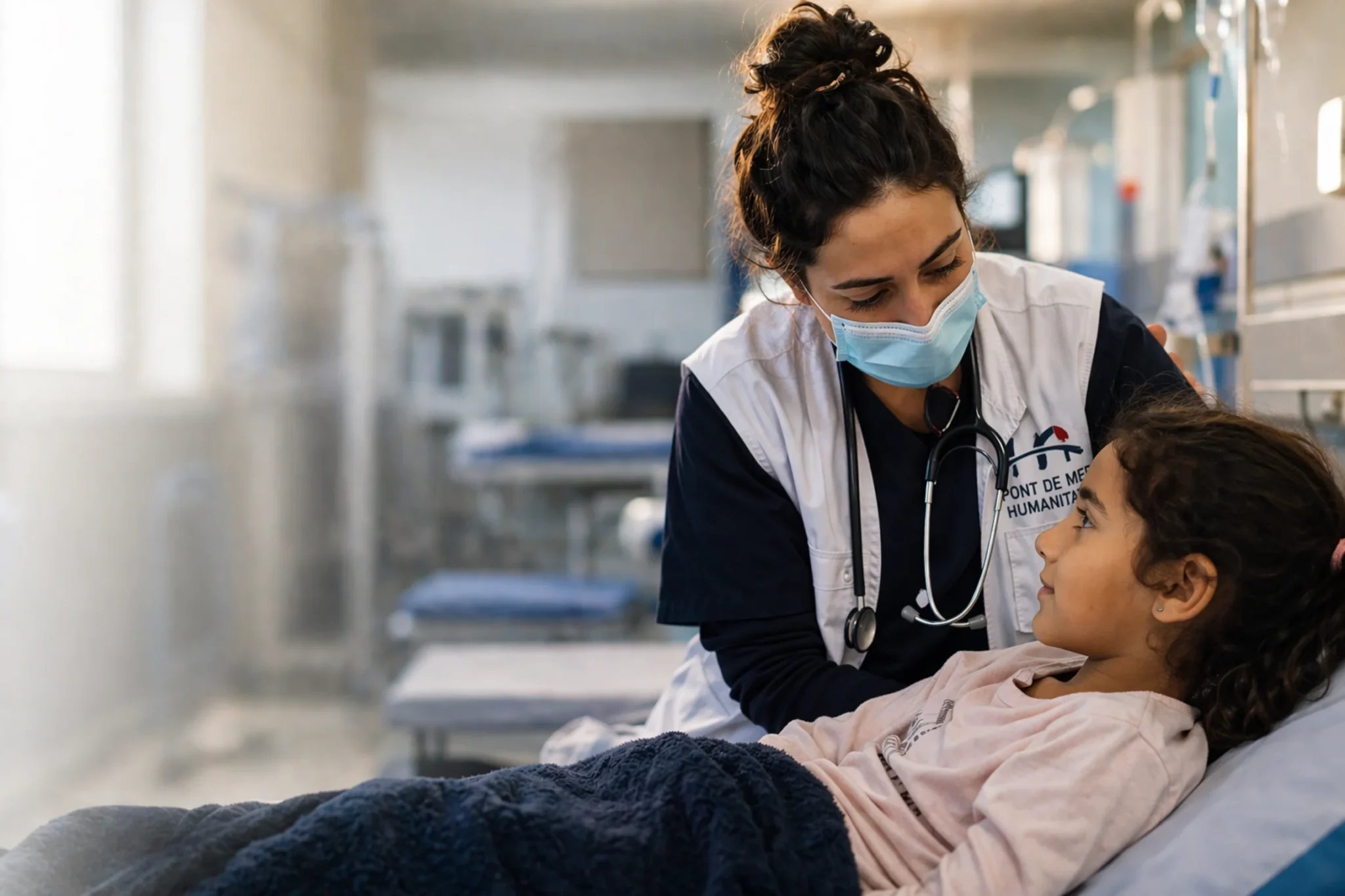
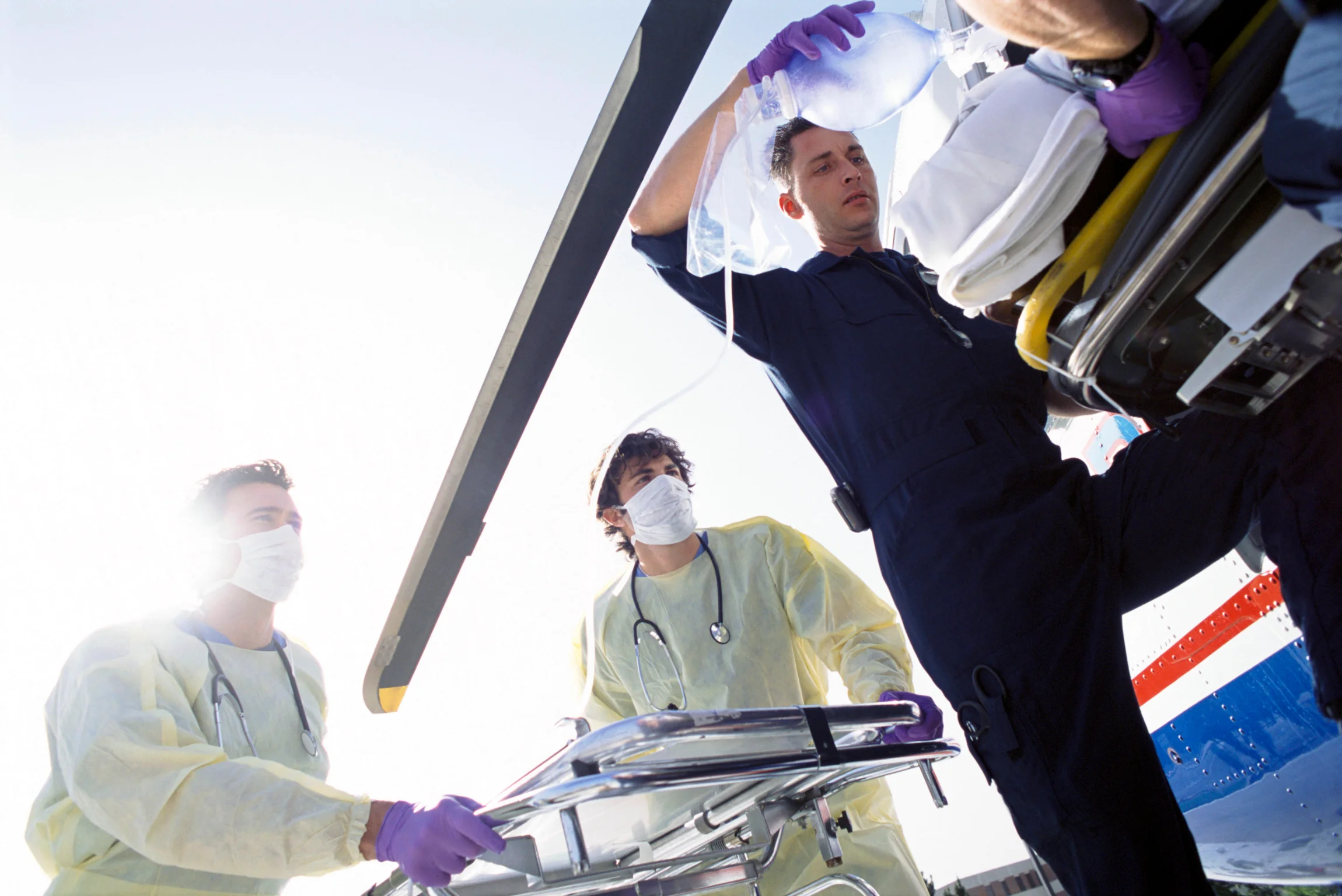
WHO supports the medical evacuation of severely ill or injured patients who need lifesaving or specialised care unavailable in Gaza.
WHO's 23 February 2026 operational overview recorded 11,124 patients evacuated since October 2023, including 5,835 children, with 13,032 companions. At that time, more than 18,500 patients urgently needed treatment unavailable in Gaza.
A later WHO operational update dated 26 March 2026 recorded 11,209 patients and 13,215 companions evacuated to more than 30 countries. Figures evolve as operations continue.
Before October 2023, roughly 50–100 patients per day were leaving Gaza for medical treatment.
Medical referral
A doctor or specialist examines the patient and, when treatment abroad is medically required, issues a referral form. The public hospital submits it to the Referral Committee, which reviews cases, determines priority and approves cases for medical evacuation.
In its 10 April 2026 statement, WHO states that the Referral Committee is composed of local health officials from Gaza, that WHO is not a member, and that the committee bears sole responsibility for prioritization.
Being prioritised does not mean being evacuated
A patient may have a severe condition, a valid referral, complete medical information and high clinical priority — and still be unable to leave Gaza.
Clinical prioritization is only one gate in the pathway.
For the Rafah pathway described by WHO in April 2026, the Palestinian Authority shares the prioritised patient list with Israeli and Egyptian authorities for security clearance. Once clearance is granted, the Palestinian Authority shares the cleared list with WHO.
A medical evacuation is a chain, not a single decision
Medical need → Referral → Prioritization → Receiving-country acceptance → Clearances → Accessible route → Transfer → Entry/transit → Treatment → Continuity after arrival.
Different actors control different links. No single institution controls the entire pathway.
Who decides what?
| Question | Main actor |
|---|---|
| Does the patient need care unavailable in Gaza? | Doctor or specialist |
| Should a referral be initiated? | Doctor at a public hospital |
| Which case receives clinical priority? | Referral Committee |
| Does WHO select patients? | No |
| Who accepts the patient? | Receiving country / programme / health provider |
| Who grants movement or security clearances? | Competent authorities for the relevant route |
| Who coordinates WHO-supported transfer? | WHO with relevant partners |
| Who decides a visa or right of entry? | Authorities of the receiving State |
| Who determines international protection? | Competent national authorities and courts |
Beware of fraud
The Ministry of Health and WHO do not charge fees at any stage of the medical evacuation process.
Only a doctor at a public hospital can initiate the medical referral process described by WHO.
WHO and other United Nations agencies do not select or prioritise patients and do not approve referrals for treatment abroad. Selection and prioritization are the sole responsibility of the Referral Committee.
Prioritization still does not guarantee evacuation: the process also depends on host-country acceptance and required clearances.
Do not pay anyone to register or prioritise a patient, change or add a companion, or accelerate an evacuation.
WHO fraud reporting channel: medevac-support-gaza@who.int
Where have evacuated patients gone?
WHO's 23 February 2026 overview listed the leading destinations since October 2023 as:
| Egypt | 6,600 |
| United Arab Emirates | 1,518 |
| Qatar | 970 |
| EU countries | 611 |
| Jordan | 525 |
| Türkiye | 449 |
| Algeria | 136 |
| Uzbekistan | 100 |
| Tunisia | 73 |
| Oman | 56 |
The five leading medical needs among patients evacuated since 7 May 2024 were trauma, oncology, ophthalmology, congenital anomalies and cardiovascular disease.
Europe: mechanisms exist, but States create the capacity
Medical evacuations to the WHO European Region have been organized both through the EU Civil Protection Mechanism and through bilateral arrangements with receiving States.
WHO/Europe reported in October 2025 that more than 1,000 patients had been medically evacuated from Gaza to 17 countries in the WHO European Region. Almost all bilateral medical evacuations to six Member States in the Region had been organized from Cairo airport. WHO also reported that two out of three medical evacuations conducted through the EU Civil Protection Mechanism had been facilitated from Egypt.
WHO can coordinate, advocate and present cases, but it cannot create hospital capacity or a sovereign offer of admission by a State.
Evacuation is not the end of the pathway
Crossing the border does not automatically resolve the patient's situation. After departure, the pathway may still involve transit status, onward travel, entry permission, hospital admission, treatment funding, accommodation, food, translation, transport, companion needs, social protection, medical follow-up and decisions about what happens after treatment.
The challenge is often maintaining continuity between the person, institutions, decisions, resources and time.
Education: a different chain of decisions
A university admission is essential, but it is not sufficient.
Academic admission → Scholarship/funding → Documentation → Ability to leave Gaza → Visa or entry permission → Travel → Accommodation and welfare → University reception → Continuity of studies.
A student can hold a university offer and full funding while still lacking an effective route to reach the country concerned.
The United Kingdom's 2026 policy illustrates the distinction: eligible students require a fully funded and verified scholarship, must meet immigration requirements and undergo security checks, while the government seeks to support eligible students and dependants to exit Gaza and travel to the UK.
One open door does not mean that all the other doors are open.
International protection: an essential distinction
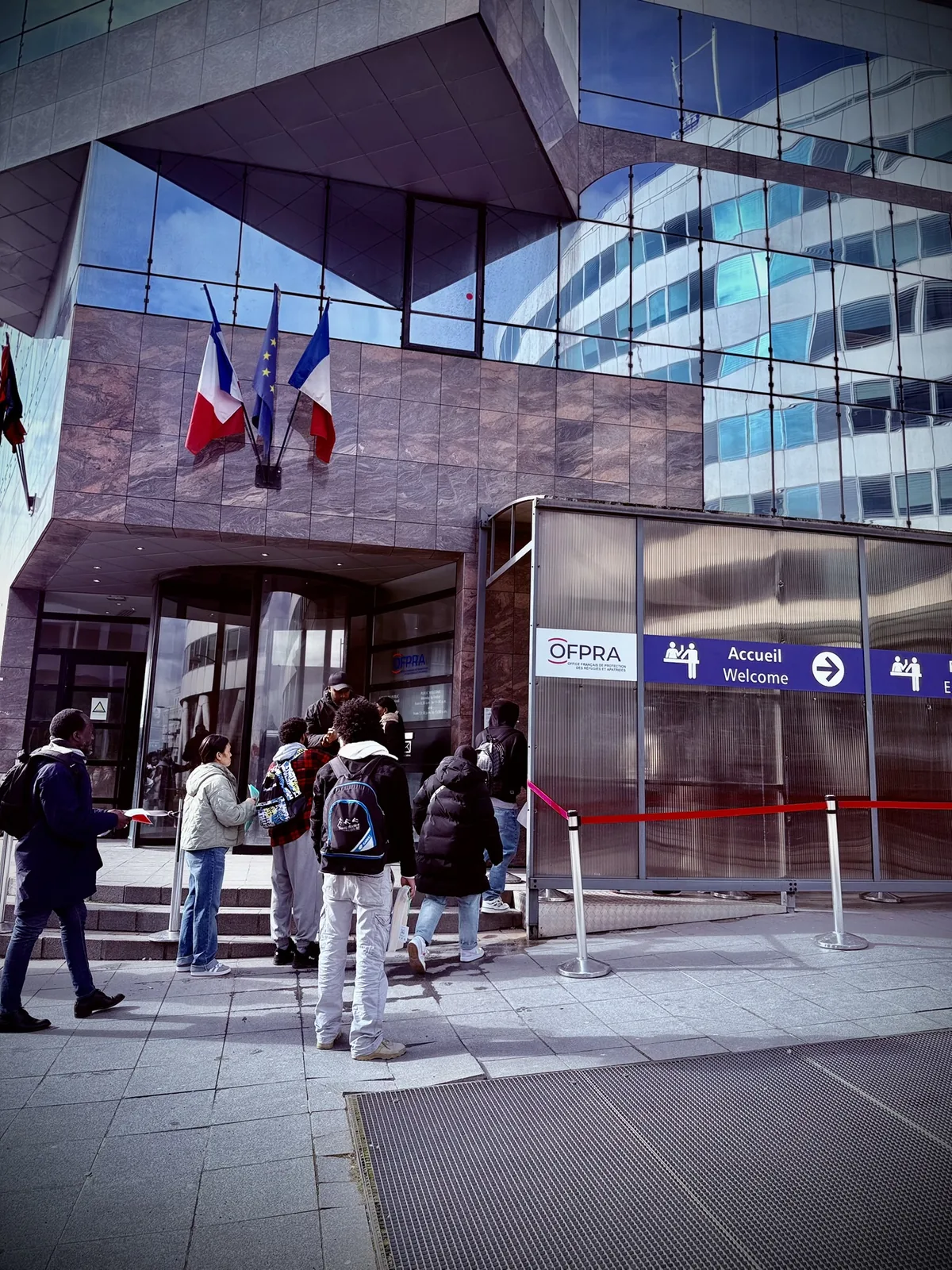
International protection is not an evacuation mechanism from Gaza. It concerns whether a person who reaches or otherwise comes within a State's protection procedure qualifies for refugee status or another form of protection under the applicable legal framework.
National rules and case law differ. France, for example, has developed significant case law concerning Palestinians from Gaza, including persons who were and were not covered by UNRWA protection.
they do not, by themselves, create an automatic right to leave Gaza, an evacuation mechanism, an automatic visa or a general right of admission to the country concerned.
Comparing the three pathways
| Medical evacuation | Academic mobility | International protection | |
|---|---|---|---|
| Starting point | Medical need | Study plan / admission | Need for protection |
| Initial actor | Doctor | Student / institution | Person concerned |
| Core criterion | Need for unavailable care | Admission and viable pathway | Applicable protection law |
| WHO involved | Yes, in medevac support | No | No |
| Exit automatically guaranteed | No | No | No |
| Third State required | Yes | Yes | Yes for admission to its territory |
| After arrival | Treatment and continuity of care | Studies and reception | Protection procedure and integration |
What Human Sea Bridge can do — and what it cannot do
What we can do
- Document a situation and assemble relevant records.
- Verify available information.
- Identify actors who may contribute to a solution.
- Explore credible medical assessment or treatment options.
- Connect institutions, providers and people concerned.
- Support certain administrative and logistical steps.
- Mobilise partners or resources where possible.
- Help maintain continuity across institutions and stages.
- Document bottlenecks and engage competent institutions when justified.
What we cannot do
- Decide a patient's medical referral.
- Change Referral Committee priority.
- Add someone to an official evacuation list.
- Require WHO to evacuate a patient.
- Grant an exit clearance.
- Compel a State to accept a patient.
- Issue a visa.
- Determine international protection.
- Guarantee hospital or university admission.
- Guarantee the outcome of a pathway.
We commit to rigorous casework, honest information and continuity of support.
Going further
Who are the “Israeli authorities” referred to by WHO?
WHO public-facing documents generally use the term “Israeli authorities” when describing security clearances. WHO's 2025 response report also refers specifically to liaison with the Coordination of Government Activities in the Territories (COGAT) to obtain movement approvals.
A pathway can exist — and then close
National evacuation and admission arrangements can change rapidly following security, administrative or political decisions. France provided a concrete example in 2025, when evacuation operations from Gaza were temporarily suspended while additional checks were introduced. The episode illustrates a broader systemic risk: an individual may satisfy one part of a pathway while a separate institutional decision temporarily closes another.
A different kind of disruption: the regional escalation of February–March 2026
A WHO situation update dated 26 March 2026 documents a different form of pathway disruption. The regional escalation that began on 28 February led to the suspension of medical evacuations via Kerem Shalom, which remained suspended as of the date of the report.
Evacuations via Rafah were also suspended from 28 February. They resumed for two missions on 19 and 22 March — allowing 16 patients and 30 companions to be evacuated — before being paused again from 23 to 25 March because conditions were not in place for operations to continue safely. Evacuations resumed on 26 March with 17 patients and 30 companions.
During this period, all other crossings into Gaza remained closed. Kerem Shalom reopened on 3 March for fuel and humanitarian supplies, but access for medical supplies remained severely constrained.
Can countries be compared?
Yes — but only when the data are genuinely comparable: the same period, the same definition of “patient”, a clear separation between patients and companions, and no mixing of medical, family, academic or other humanitarian pathways.
Human Sea Bridge's approach is simple: compare when the data support comparison; state the limitations when they do not; update conclusions when better evidence becomes available.
EU Civil Protection, humanitarian aid and other EU instruments are not the same thing
The EU Civil Protection Mechanism can support medical evacuation coordination and logistics. DG ECHO manages EU humanitarian aid and civil protection. Other EU financial instruments supporting Palestinian institutions or health services may sit under different policy frameworks. Funding humanitarian operations, financing Palestinian health services and receiving patients in European hospitals are therefore distinct forms of action.
Field actors: from transfer in Gaza to support in Egypt
The Palestine Red Crescent Society (PRCS) plays an essential operational role on the ground, including supporting the transfer of patients and wounded people who cannot move independently towards departure points.
In Egypt, the Egyptian Red Crescent supports patients and families beyond the border crossing through material assistance, post-hospital support and psychosocial services. IFRC has reported support to more than 7,000 patients and 15,000 family members.
PRCS has also documented operational constraints including limited ambulance availability and shortages of fuel and spare parts. These constraints can themselves limit the ability to move patients within the required timeframe.
Funding does not tell us how many patients a country receives
A State or the European Union may finance health facilities, medicines, humanitarian response, Palestinian health services or logistics without receiving an equivalent number of patients on its own territory. Conversely, patient admissions alone do not measure a country's entire humanitarian contribution. These indicators answer different questions.
Human Sea Bridge's position
WHO's 23 February 2026 overview recorded more than 18,500 patients urgently needing treatment unavailable in Gaza, while 11,124 patients had been evacuated since October 2023.
WHO recommends rebuilding and rehabilitating Gaza's health system, reopening referral routes to the West Bank including East Jerusalem, increasing Member States' acceptance of patients from Gaza for treatment, and enabling patients to return to Gaza in a dignified and orderly manner after treatment.
Human Sea Bridge supports these recommendations and considers current receiving capacity insufficient in relation to the documented need.
This gap cannot be reduced to border access alone. A successful evacuation requires a valid referral and priority, a receiving country, an available medical solution, the necessary clearances, an operational transfer and continuity after arrival.
States with suitable hospital capacity — in Europe and beyond — can and should increase their contribution.
This means not only more treatment places, but better coordination between health authorities, diplomatic and consular services, hospitals and organisations involved in the pathway.
Legitimate security, border-control, hospital-capacity and administrative requirements should not be ignored. The challenge is to prevent a succession of legitimate procedures, when poorly connected, from becoming a lasting barrier to access to lifesaving care.
Human Sea Bridge also considers comparison between national approaches legitimate when the evidence is sufficiently robust. The purpose is not to label “good” and “bad” countries, but to identify what enables pathways to succeed, what slows them elsewhere and what can be replicated.
Advocacy should focus on outcomes and workable solutions, not political affiliation.
Why can a pathway fail even when every actor appears to be doing its job?
A doctor may correctly identify the need. The Referral Committee may prioritise the patient. WHO may fulfil its role. A hospital may have the required expertise. An administration may correctly apply its own rules.
And yet the patient may still not leave.
The problem may not be the total absence of a solution. It may lie between solutions:
- between the hospital and the State;
- between clinical priority and receiving capacity;
- between permission to enter and permission to exit;
- between evacuation and continuity of care;
- between university admission and a visa;
- between a potentially valid protection claim and the physical possibility of reaching the jurisdiction where it can be examined.
These are interface gaps. No single institution is necessarily responsible for resolving all of them.
This is precisely where Human Sea Bridge operates
Human Sea Bridge is not a hospital, an international organisation, a border authority, a consulate, a university or a court.
Its role is not to replace those actors. It is, where possible and legitimate, to build continuity between them.
Receive a request. Document. Verify. Assess. Identify the competent actors. Connect the stages. Mobilise available resources. Follow up. Transfer information. Escalate when appropriate. Prepare the next stage before the previous one is complete. And when no viable solution exists, say so without creating false hope.
Frequently asked questions
Can WHO add a patient to an evacuation list?
No. WHO states that it does not select or prioritise patients.
Can someone be paid to speed up an evacuation?
No. WHO and the Ministry of Health do not charge fees for the process. Any request for payment to alter priority or accelerate evacuation should be treated with extreme caution.
Does clinical priority guarantee evacuation?
No. Evacuation also depends on receiving-country acceptance, required clearances and an operational route.
Does a university admission guarantee exit from Gaza?
No. Admission, funding, departure, entry permission and travel are separate stages.
Does refugee law automatically create a route into another country?
No. Protection law determines whether protection is owed under the applicable procedure; it does not by itself create an evacuation or automatic entry route.
Can Human Sea Bridge obtain a visa?
No. Visa and entry decisions belong exclusively to the competent national authorities.
Can Human Sea Bridge organize a medical evacuation from Gaza on its own?
No. We can help document, connect and coordinate parts of a pathway, but we do not replace the referral system, WHO or the authorities responsible for movement and admission.
Why work on a case if Human Sea Bridge does not control the final decision?
Because several steps often separate a theoretically available solution from an actually accessible one. Our work focuses on that continuity.
Sources and methodology
This page relies primarily on institutional and first-party sources, including:
- World Health Organization (WHO / WHO EMRO / WHO Europe): medical evacuation process, actors' roles, statistics, fraud warning, receiving-country coordination and recommendations.
- European Union institutions: EU Civil Protection Mechanism and medical evacuation coordination.
- National authorities: country-specific entry, education and protection frameworks where used as examples.
- Palestine Red Crescent Society, Egyptian Red Crescent, IFRC and Red Cross sources: operational roles in patient transfer and support.
- French National Court of Asylum and Conseil d'État: French legal examples referenced in the international-protection and pathway-disruption sections.
Parliamentary, humanitarian and journalistic sources may complement primary sources where information is not available directly from the competent authority. Information that cannot be sufficiently corroborated is not presented as consolidated fact.
Conditions and figures relating to Gaza change rapidly.
This page does not replace official WHO guidance, national-authority information, or individual medical, immigration or legal advice.